
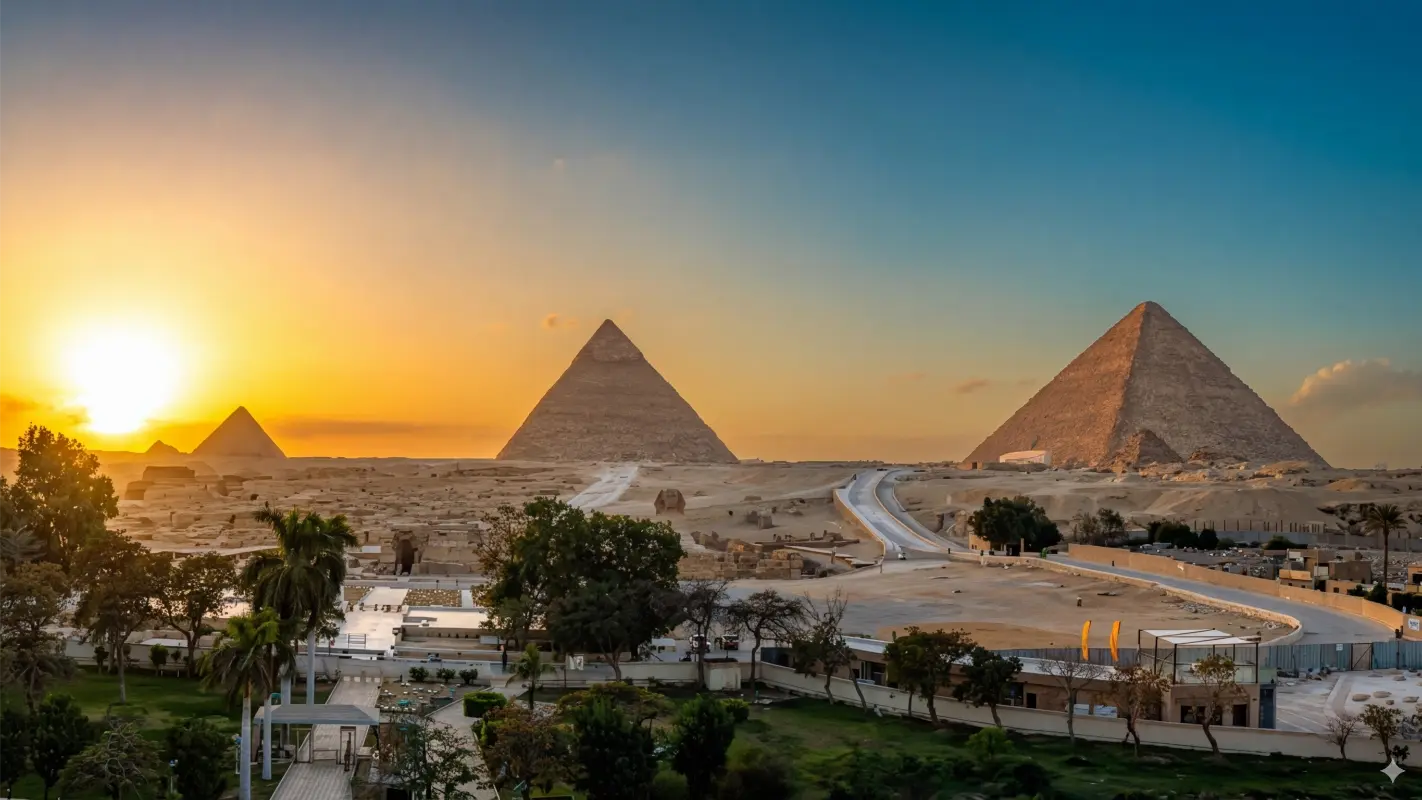
Giza Pyramids and the Great Sphinx visiting is a journey through time and ancient civilization. During your visit, you will see one of the world’s most famous ancient wonders and discover how the ancient Egyptians built a monument that has amazed the world with its remarkable precision using simple tools and skilled hands. They created a legacy that has endured for thousands of years.
The pyramids of Egypt are a masterpiece of existence that rivals the stars of the heavens and points toward them, demonstrating that the Egyptian—a son of the Nile—mastered earthly sciences and explored celestial mysteries. People come from every corner of the globe to witness the world’s most famous archaeological site and to realize that knowledge, labor, and connection with the cosmos constitute the enduring legacy of our imperishable civilization.
Where Are the Giza Pyramids Located?
The Giza Pyramids and the Great Sphinx are located in Giza Governorate, on the Giza Plateau, near Al-Haram Street (Nazlet El-Semman), on the west bank of the Nile River.
Moreover, this area is one of the world’s most famous tourist destinations. It includes many remarkable archaeological landmarks, such as the Valley Temples, the Great Sphinx, and the tombs of high-ranking officials, all of which reflect the greatness of ancient Egyptian civilization.
How to Reach the Giza Pyramids and the Great Sphinx by Metro
The nearest metro station to the Giza Pyramids and the Great Sphinx is Giza Metro Station.
After leaving the station, you can take a bus, minibus, or taxi to the Pyramids area. Alternatively, you can take a public bus heading toward Al-Haram and get off near the entrance to the archaeological site.
If you are coming from Downtown Cairo, take Metro Line 1 to Sadat Station, transfer to Metro Line 2 (Shubra El-Kheima – El-Monib), and get off at Giza Station. Then, take a minibus or taxi to the Pyramid entrance.
Book Giza Pyramids Tickets Online 2026
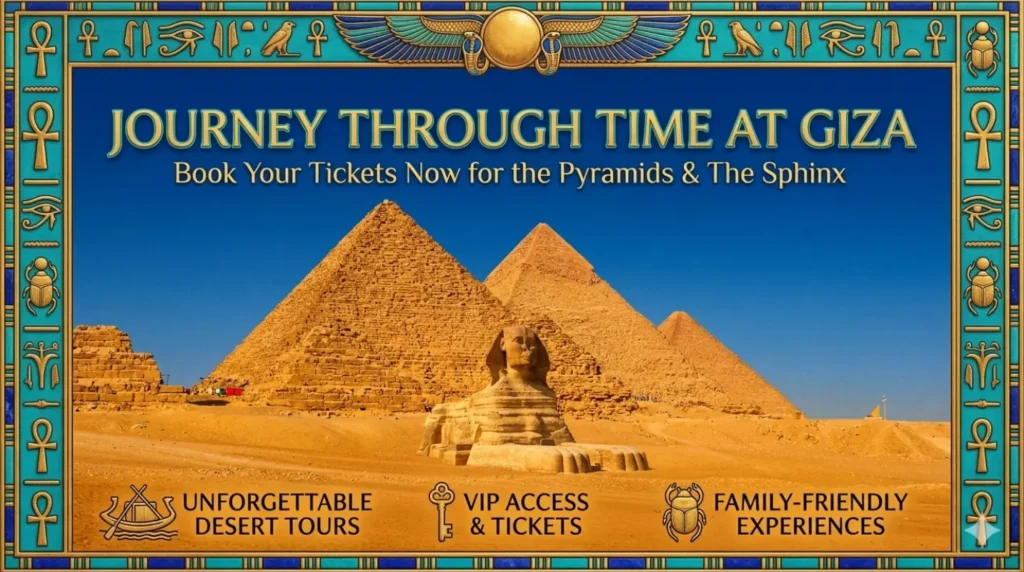
Enjoy a memorable visit to the Giza Pyramids and the Great Sphinx, and experience one of the Seven Wonders of the Ancient World before the winter season ends
You can book your Giza Pyramids tickets online through the Egyptian Ministry of Tourism’s official website. You can also purchase your tickets at the ticket office or from the self-service ticket machines available at the site to avoid long waiting times.
In addition, ticket payments are accepted by bank card only, making the booking process simple and secure.
Giza Pyramids Ticket Prices 2026
Ticket prices for the Giza Pyramids (Khufu, Khafre, and Menkaure) vary for Egyptians and foreign visitors. In addition, each pyramid requires a separate entrance ticket. The following table shows the ticket prices for each pyramid and the available services to help you plan an enjoyable visit.
|
Ticket Type |
Egyptian adults |
Egyptian students |
Foreigners adults |
Foreigners students |
|---|---|---|---|---|
|
Giza Pyramids Entrance Ticket 2026 |
60 EGP |
30 EGP |
700 EGP |
350 EGP |
|
Great Pyramid (Khufu) Ticket |
150 EGP |
75 EGP |
1500 EGP |
750 EGP |
|
Khafre Pyramid Ticket |
30 EGP |
10 EGP |
280 EGP |
140 EGP |
|
Menkaure Pyramid Ticket |
30 EGP |
10 EGP |
– |
– |
|
Meresankh III Tomb ticket |
20 EGP |
5 EGP |
200 EGP |
100 EGP |
|
Workers’ Tombs (Minimum 5 Tickets) |
– |
– |
700 EGP |
350 EGP |
Transportation inside the archaeological site is also available. The minibus costs 40 EGP, the bus costs 60 EGP, and private cars or taxis pay 20 EGP.
Moreover, camel, horse, and carriage rides cost 400 EGP per hour for Egyptians and 1,000 EGP per hour for foreign visitors.
Visitors Exempt from giza pyramids Entrance Fees
- Children under 6 years old.
- Visitors with disabilities
- Senior citizens over 60 years old
Giza Pyramids Opening Hours 2026
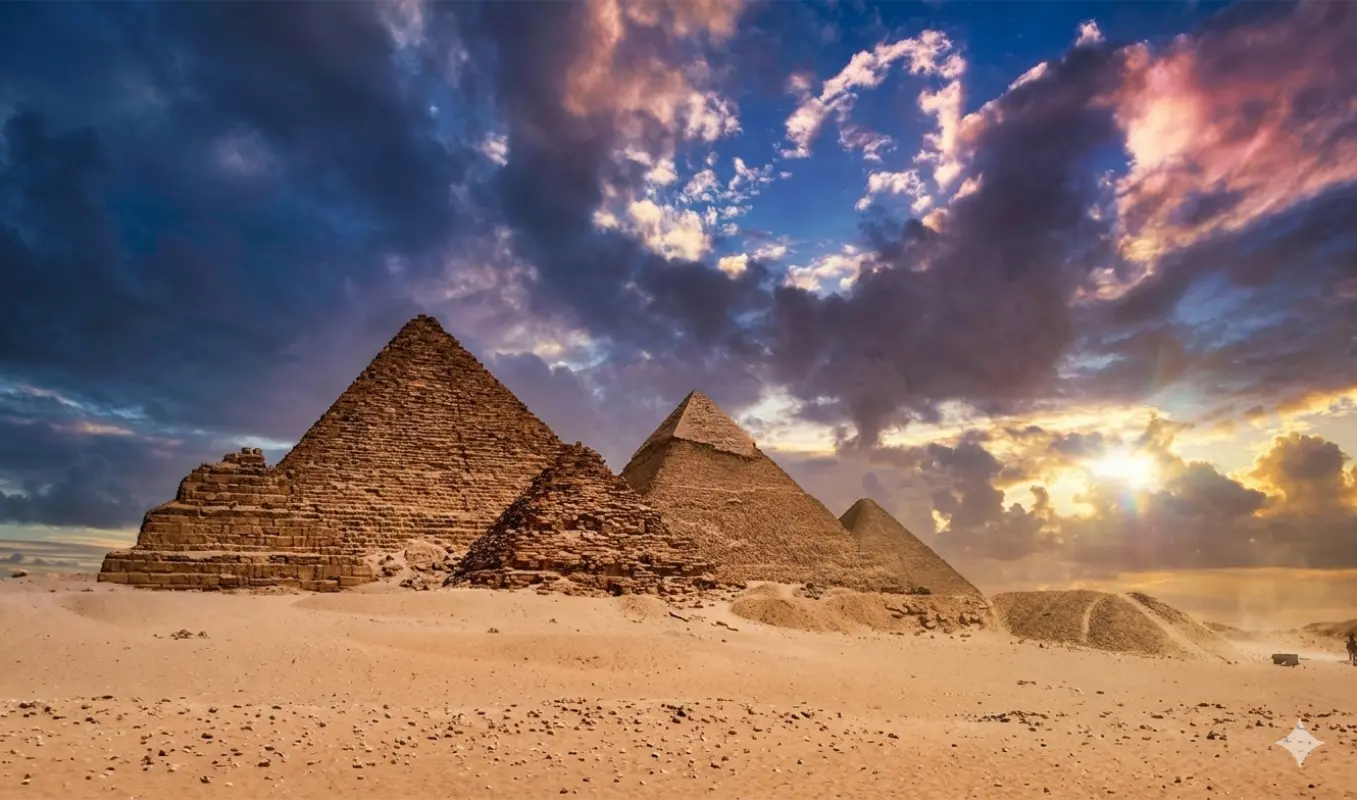
The Giza Pyramids and the Great Sphinx are open daily from 7:00 AM to 4:00 PM.
giza pyramids Summer Opening Hours
During summer, the site opens from 7:00 AM, and the last admission is at 4:00 PM.
giza pyramids Winter Opening Hours 2026
During winter, the site opens from 8:00 AM, and the last admission is at 4:00 PM.
giza pyramids Ramadan Opening Hours
During Ramadan, the site is open from 8:00 AM until 3:30 PM.
giza pyramids Eid Opening Hours
During Eid holidays, visitors can enter the site from 7:00 AM to 5:00 PM.
Giza Pyramids Tours
A trip to the Giza Pyramids is one of the best one-day tours and outings in Egypt because it combines history, culture, and entertainment.
The tour is suitable for families, students, and tourists who want to explore the three pyramids and the Great Sphinx.
In addition, primary and preparatory school students can join school trips to the Pyramids free of charge, except on Fridays, Saturdays, and official holidays. Therefore, these tours offer both an educational and an enjoyable experience.
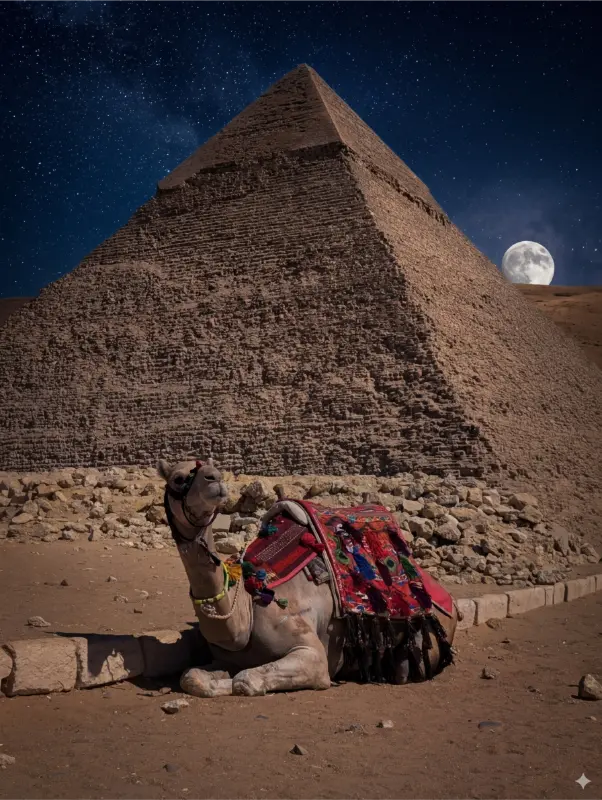
Tips Before Visiting the Giza Pyramids and the Great Sphinx
To make the most of your visit, keep the following tips in mind:
- Wear comfortable walking shoes because you will walk long distances, even if you use the internal buses
- Charge your phone before your visit.
- Bring a backpack with water and snacks, as prices inside the site are generally higher.
- Don’t forget your sunglasses and a hat because the sun can be very strong.
- Bring your bank card, as ticket purchases are cashless.
- Use the official entrances only. Do not follow anyone who claims that a gate is closed and offers to take you to another entrance for money.
- Visit on weekdays if possible, as weekends and public holidays are usually crowded.
- – Large professional cameras are not permitted, while mobile phone photography is allowed free of charge.
- There are three restaurants inside the Pyramids area, but it is recommended to make a reservation before your visit.
Best Things to Do at the Giza Pyramids and the Great Sphinx
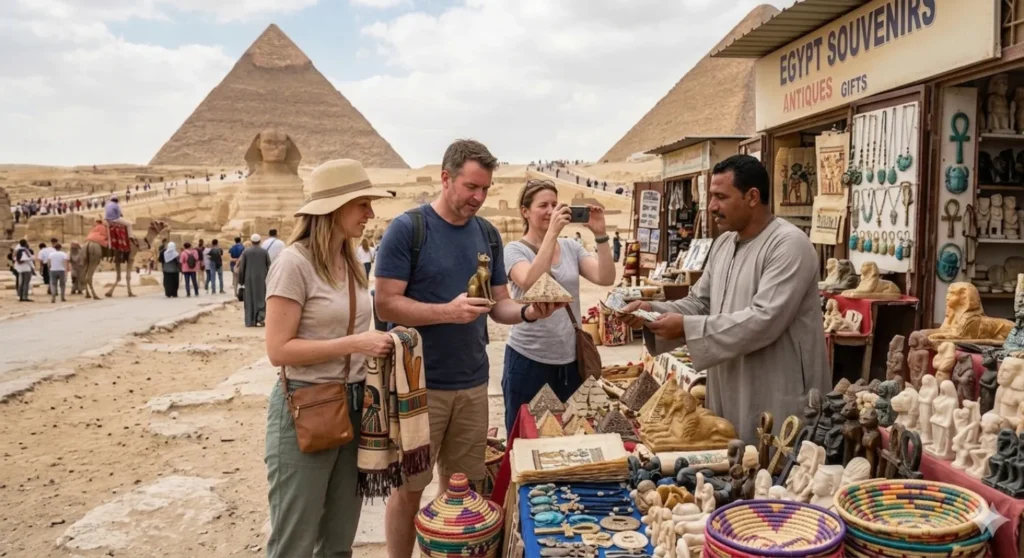
During your visit to Giza Pyramids, you can enjoy a variety of activities. For example, you can shop for souvenirs at the Great Sphinx Bazaar.
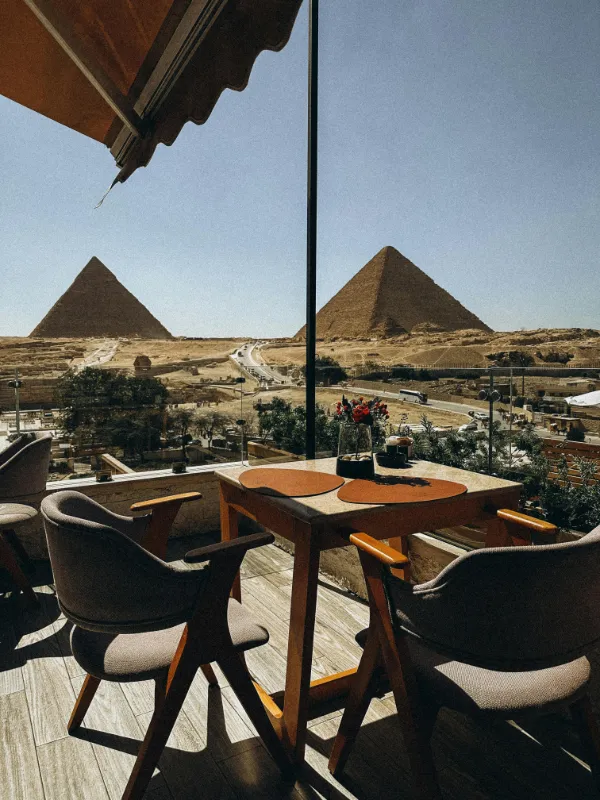
visit the Panorama Area to capture breathtaking photos of all three pyramids, or relax at one of the cafés inside the archaeological site.
You can also attend the famous Sound and Light Show, which tells the story of ancient Egypt through impressive visual effects.
Furthermore, mobile phone photography is free, visitors may bring their own food and drinks, and shuttle buses make it easy to travel around the archaeological site.
Giza Pyramids and Sphinx
How Were the Pyramids Built?
During your visit to Giza Pyramids, you can enjoy a variety of activities. For example, you can shop for souvenirs at the Great Sphinx Bazaar.
visit the Panorama Area to capture breathtaking photos of all three pyramids, or relax at one of the cafés inside the archaeological site.
You can also attend the famous Sound and Light Show, which tells the story of ancient Egypt through impressive visual effects.
Furthermore, mobile phone photography is free, visitors may bring their own food and drinks, and shuttle buses make it easy to travel around the archaeological site.
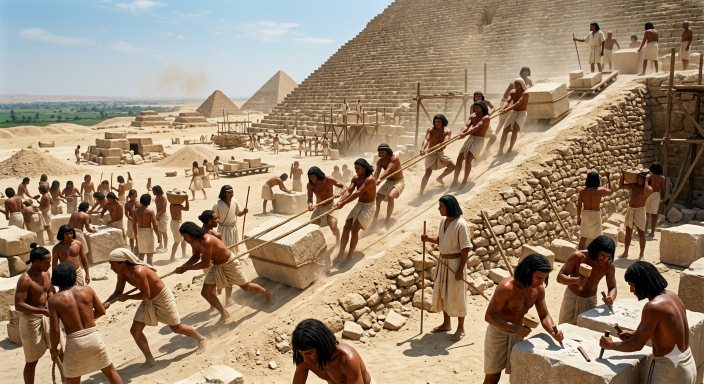
About 300 kilometers from the Giza Pyramids, at an ancient alabaster quarry, a French-British archaeological mission discovered a curved ramp carved into the rock.
The site also contained wooden posts along the sides of the ramp, which helped workers pull the stones upward with ropes.
Although many theories exist, the construction of the Pyramids remains one of history’s greatest mysteries and continues to demonstrate the remarkable skill and ingenuity of the ancient Egyptians.
Giza Pyramids
The Giza Pyramids are the most famous of the Seven Wonders of the Ancient World. Their builders designed them with extraordinary engineering precision, aligning each pyramid almost perfectly with the four cardinal directions: north, south, east, and west.
The pyramids are also remarkable for their enormous scale. Builders used approximately 2.3 million stone blocks, and some of these blocks weigh more than 15 tons.
The Great Pyramid originally stood 146.6 meters tall, making it the tallest man-made structure on Earth for nearly 3,800 years.
Moreover, the Giza Pyramids have survived for more than 4,600 years and continue to raise questions about how the ancient Egyptians lifted and positioned such massive stones.
Another remarkable feature is the network of internal passages and chambers, including the King’s Chamber, the Queen’s Chamber, and the Grand Gallery.
These features have encouraged researchers to continue studying the true purpose of the pyramids.
In addition, the Giza Pyramid Complex is a UNESCO World Heritage Site, making it one of the world’s most important archaeological destinations.
The Great Pyramid of Khufu
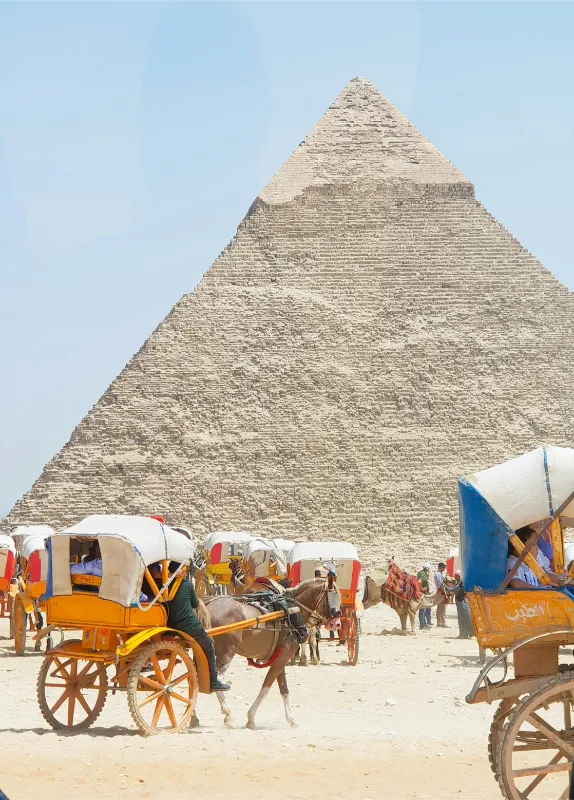
The Great Pyramid of Khufu is the largest of the three pyramids at Giza and one of the Seven Wonders of the Ancient World
. Ancient Egyptians built it during the reign of King Khufu of the Fourth Dynasty around 2580 BC.
The pyramid originally stood 146.6 meters high. Today, its height is approximately 138.8 meters due to the loss of its outer casing stones.
Each side of its square base measures about 230 meters, and the pyramid rises at an angle of approximately 51°50′40″.
Key Facts About the Great Pyramid of Khufu:
Design
Builders constructed the pyramid using approximately 2.3 million stone blocks, with an average weight of about 2.5 tons per block.
They applied advanced engineering techniques to achieve exceptional precision in its dimensions and angles.
Interior
The pyramid contains the King’s Chamber, the Queen’s Chamber, and an unfinished underground chamber.
Its original entrance is located on the northern side and leads to a complex system of narrow corridors and passageways.
History
Construction took approximately 20 years to complete. Originally, workers covered the pyramid with polished white limestone casing stones, most of which disappeared over time.
Symbolism
The ancient Egyptians considered the pyramid a symbol of royal power and eternal life. Many scholars believe that its shape represented a ray of sunlight descending from the sky.
Discoveries
Archaeologists have made several important discoveries around the pyramid, helping researchers better understand the religious beliefs and burial traditions of ancient Egypt.
“The Great Pyramid of Khufu stands as a remarkable testament to the ancient Egyptians’ mastery of engineering, mathematics, and monumental construction.”
Khafre Pyramid
“The Pyramid of Khafre, built during the reign of King Khafre of Egypt’s Fourth Dynasty around 2558 BC, is the second‑largest of the Giza pyramids.”
Today, the pyramid stands about 136 meters high, and each side of its base measures approximately 215 meters.
The Pyramid of Khafre is especially famous because the Great Sphinx stands nearby. It contains a single burial chamber and consists of massive stone blocks assembled with remarkable engineering precision.
Menkaure Pyramid
The Pyramid of Menkaure is the smallest of the three pyramids at Giza. Ancient Egyptians built it during the reign of King Menkaure of the Fourth Dynasty around 2510 BC.
Today, the pyramid stands approximately 65 meters high, and each side of its base measures about 102 meters.
The pyramid is distinguished by the three smaller Queen’s Pyramids located nearby. It contains one burial chamber and was built with large stone blocks.
In addition, it includes inscriptions and decorative elements that depict the king’s life and ancient Egyptian burial rituals.
The Great Sphinx of Giza
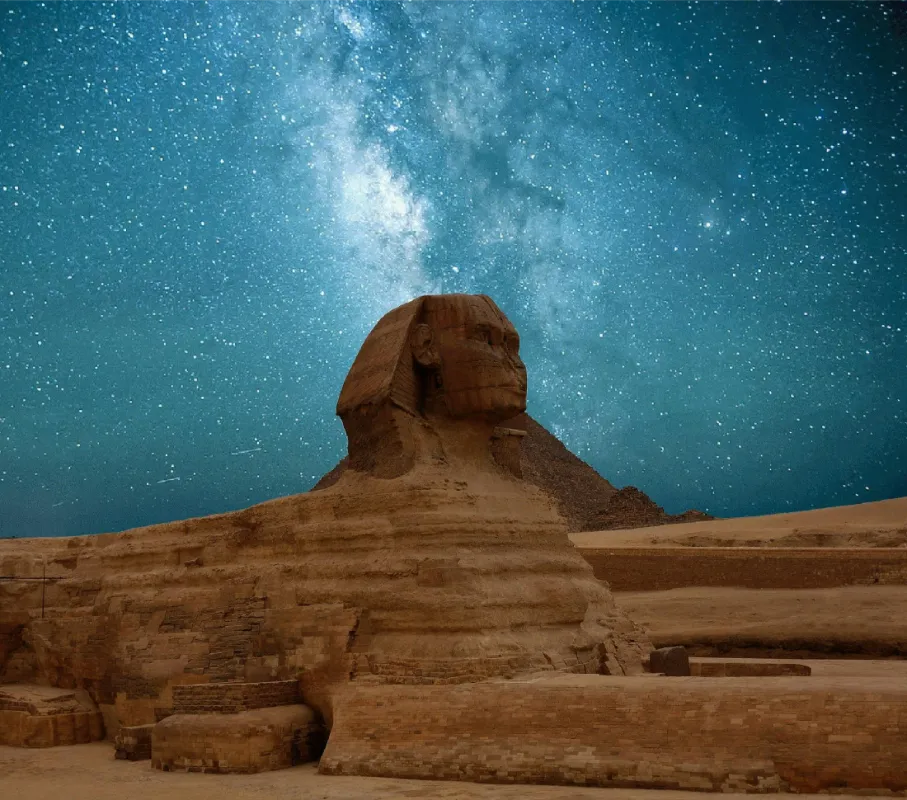
On the Giza Plateau, the Great Sphinx has stood beside the three pyramids for more than 4,500 years.
With the body of a lion and the head of a human, it is one of the oldest and most mysterious statues in the world.
Many archaeologists believe that the Sphinx symbolizes the strength and wisdom of the pharaoh.
It remains one of the most famous landmarks of ancient Egypt and attracts millions of visitors every year.
Who Is the Great Sphinx?
The Great Sphinx is a massive limestone statue located on the Giza Plateau near the three pyramids in Egypt.
“Depicting a human head atop a lion’s body, the monument is among the world’s oldest and most iconic structures.”
“Depicting a human head atop a lion’s body, the monument is among the world’s oldest and most iconic structures.”
Most scholars believe that ancient Egyptians carved the Sphinx during the reign of King Khafre of the Fourth Dynasty, around 2500 BC.
They also believe that it symbolized royal power and protection. The statue measures approximately 73 meters in length and 20 meters in height, making it one of the largest monolithic statues ever created.
Who Built the Great Sphinx?
Most Egyptologists believe that King Khafre commissioned the construction of the Great Sphinx around 2500 BC during the Fourth Dynasty.
Many researchers also believe that the face of the Sphinx represents Khafre and that the monument stood as a symbol of royal authority near his pyramid.
However, other theories suggest that King Khufu, Khafre’s father, or Djedefre, Khufu’s son, may have commissioned the monument.
Despite these theories, most archaeological evidence supports Khafre as its builder.
Why Is It Called the Great Sphinx?
The name “Sphinx” originated in ancient times and later became widely used in Greek tradition.
In ancient Egypt, the monument was known as Horemakhet, meaning “Horus of the Horizon.”
This name reflected the monument’s association with the rising sun and the eastern horizon.
Today, the Great Sphinx remains one of the most famous symbols of ancient Egyptian civilization.
The Story of the Sphinx’s Nose
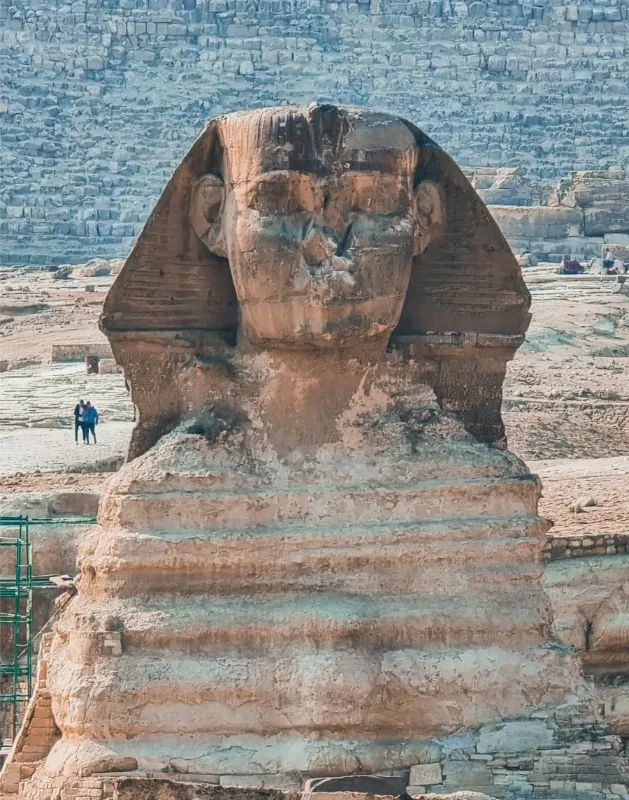
Many people believe that French soldiers broke the Sphinx’s nose with cannon fire during Napoleon’s campaign in Egypt. However, historians have found no reliable evidence to support this story.
Another historical account states that Muhammad Sa’im al-Dahr, a Sufi figure, damaged the nose after seeing people making offerings to the statue.
The medieval historian Al-Maqrizi recorded this account in his writings.
Although the exact cause remains uncertain, the Sphinx had already lost its nose long before modern archaeological studies began.
Frequently Asked Questions About the Giza Pyramids and the Great Sphinx
“Discover the wonders of Egypt through my articles, where history, culture, and breathtaking landmarks come alive: